Author: Esther Matthias

  • When Innovation Feels “Too Far”


    Innovation has a funny way of testing society’s imagination. Sometimes, the ideas that seem too radical or “impossible” at first later become indispensable parts of daily life. Take the story of Mudashiru Ayeni, for example. In 1971, Ayeni designed the Receptograph, a groundbreaking technology whose purpose and potential many could not immediately grasp. At the time, he was dismissed, even mocked, for an invention that now we celebrate as an essential tool in modern administration and data management.

    This story illustrates a timeless truth: when an innovation surpasses the limits of what people can imagine, it often meets skepticism, ridicule, or outright rejection. History is littered with “mad inventors” whose contributions only gained recognition decades later.

    Fast forward to today, and the same challenge exists in classrooms, laboratories, and online learning platforms. Students often develop creative solutions, unconventional projects, or forward-thinking ideas that fail to receive acknowledgment because they don’t fit within traditional expectations. A brilliant concept can be overlooked simply because it feels too far ahead, too ambitious, or too different from the norm.

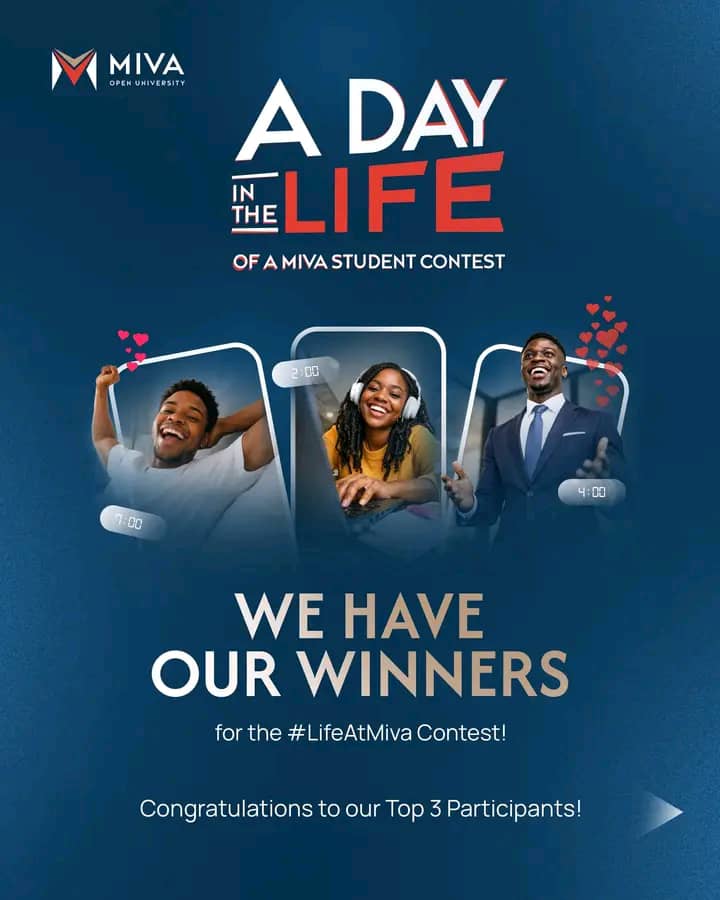
    This is where platforms like Miva Open University come in. By providing a supportive environment for students to explore, test, and share their ideas, Miva is creating spaces where “too radical” no longer means “ignored.” Whether it’s through competitions, mentorship, or showcasing student work in the #LifeAtMiva initiative, the university is helping unlock doors for innovations that might otherwise go unnoticed.

    The lesson is clear: today’s skepticism can become tomorrow’s celebration. Mudashiru Ayeni’s story reminds us that being ahead of one’s time is often uncomfortable, but persistence, vision, and platforms that nurture creativity can change the narrative. For students at Miva, the message is empowering: your ideas matter, your creativity has space to grow, and even what seems “too far” can one day shape the world.

    Innovation doesn’t just happen. It needs courage, support, and a community willing to look beyond what’s familiar — and that’s exactly what Miva is helping to build.

  • Why We’ve Stopped Reading (And Why We Should Return): My Point of View.


    I’ll admit it—I don’t read as much as I used to. Social media scrolls, endless videos, and the constant rush of notifications have replaced the quiet joy of a good book. And I know I’m not alone. Somewhere along the way, we’ve all traded pages for screens, depth for speed, and stories for instant gratification.

    But here’s the truth: we’re missing out. Reading isn’t just a pastime; it’s a refuge, a teacher, a friend. It stretches our minds, nurtures empathy, and gives our imaginations wings. A single book can carry us to worlds we’ll never see, introduce us to people we’ll never meet, and make us think in ways we never imagined.

    I want to make this a call—not just for myself, but for everyone. Let’s put down the phone long enough to feel the weight of words again. Let’s savor the rhythm of sentences, the slow unfolding of plots, the quiet triumph of finishing a chapter. Reading is not work; it’s comfort, adventure, and wonder rolled into one.

    We can scroll, yes—but we can also read. We can skim headlines—but also dive into novels. We can multitask—but also devote a few sacred hours to books that make us laugh, cry, and think. I’m ready to return to the pages. And I hope you will, too.

    Let’s bring reading back—not as an obligation, but as a joy. Let’s remind ourselves what it feels like to be truly lost in a story. The world may have rushed on, but books are still waiting, patient, comforting, and full of magic. All we have to do is pick them up again.

    I hope you do today 😉.

  • Explore Miva Open University’s Headquarters and Study Centres Across Nigeria.


    Miva Open University has steadily built a reputation for making quality education accessible across Nigeria, blending online learning with physical support hubs. practical growth in higher education. These are the available study centers that you can utilize to your advantage.

    The Headquarters,Miva Open University is located at:

    Abuja: 1059 O.P. Fingesi Road, Mabushi, FCT

    Lagos Study Centres:

    376 Herbert Macaulay Way, Yaba, Lagos State

    Café One, E Centre, 3rd Floor, 1‑11 Commercial Avenue, Yaba, Lagos State

    King’s Deck Plaza, 4th Floor, 6a Alternative Route, Behind Atlantic Mall, Chevron Drive, Lekki, Lagos State

    Ikeja Town Square, Obafemi Awolowo Way, Alausa, Ikeja, Lagos State


    Port Harcourt Study Centre:

    Plot 340 Sani Abacha Road, GRA Phase 3, Port Harcourt, Rivers State


    Other Study Centres Across Nigeria:

    Ibadan: Café One, The Palms Mall, Ring Road, Ibadan, Oyo State

    Uyo: 162 Oron Road, Beside GBW Unisex Saloon, Uyo, Akwa Ibom State

    Enugu: 22 Okpara Avenue, Achara CCB Building, Enugu State

    Kaduna: Café One Uptown Mall, Zaire Road, Barnawa, Kaduna South, Kaduna State

    Owerri: Café One, Meksy Plaza, No. 60 Ekwema Crescent Ikenegbu, Owerri, Imo State

    Abeokuta: Grazac Technologies Ltd, PROHUB, 38 Salawu Olabode Avenue, Sam Ewang Road, Idi‑Aba, Abeokuta, Ogun State.

    So, I hope this helps you out if you ever want to get to the study center.

  • University Trivia Tour Brings Cash Prizes and Financial Literacy to Miva.


    Excitement is building at Miva Open University as Brainiac Empires Ltd teams up with CSL Stockbrokers Ltd to host the University Trivia Tour on campus.

    This high-energy trivia competition is designed to test speed, knowledge, and confidence. Students will compete in fast-paced rounds where quick thinking determines who advances and who goes home. With cash prizes of up to ₦100,000 on the line, the stakes are high and the competition promises to be intense.

    Beyond the thrill of the game, the event also delivers real value. Participants will gain practical financial literacy insights, helping them better understand savings, investments, and smart money decisions. It is an opportunity to combine fun with learning in a way that feels engaging rather than academic.

    The event promises games, excitement, and bragging rights for the winners. Students are encouraged to check the official event flyer for full details and prepare to step into the spotlight.

    For more updates about activities at Miva Open University, visit:
    https://miva.university

  • Miva Enterprise Club Hosts Business Education Series on Building Sustainable Businesses.


    The Miva Enterprise Club is set to host a powerful edition of its Business Education Series focused on one of the most important questions for young entrepreneurs: how do you build a business that actually lasts?

    The session, titled “Becoming a Business Owner: How to Build a Sustainable Business Structure,” will feature Dr. Fred Ojochide Peter alongside Tolulope Toluwase from the MSME Directorate of the Bank of Industry. With the Bank of Industry playing a major role in supporting small and medium-scale enterprises across Nigeria, attendees can expect practical insights into funding structures, compliance, operational systems, and long-term growth strategies.

    Rather than focusing only on starting a business, this session will dive into building proper structures, defining roles, managing finances, and creating systems that allow a business to scale beyond the founder. Students, aspiring founders, and existing business owners will gain clarity on what separates short-lived hustles from sustainable enterprises.

    The event will hold on 15th February 2026 at 4:00 PM (WAT) via Google Meet, making it accessible to students learning from different locations.

    Registration is now open:
    https://forms.gle/ygGw78ErpkjEC3f97

    Learn more about the university here:
    https://miva.university

  • Is an Online Degree Enough for the Job Market in 2026?


    The question of whether an online degree is enough for the job market has shifted from skepticism to serious consideration in recent years. With online learning becoming mainstream and digital skills increasingly in demand, many prospective graduates are wondering whether earning a degree online can truly open doors in today’s competitive workforce.

    A decade ago, online degrees were often viewed with doubt, but perceptions are changing rapidly. Employers today are far more accepting, particularly when the degree comes from an accredited and reputable institution. In Nigeria, Miva Open University, licensed by the National Universities Commission (NUC), is leading this transformation by offering fully online programmes across technology, business, and public health. Graduates from Miva are now securing employment opportunities comparable to traditional degree holders, demonstrating that the method of learning does not diminish professional credibility. This shift is driven by the rising quality of online education, improved digital learning technologies, and the normalization of remote work. Increasingly, employers prioritize skills and demonstrated competency over where or how a degree was earned.

    Despite growing acceptance, employers still evaluate candidates on multiple factors. The accreditation and reputation of the institution remain important, as degrees from recognized universities like Miva carry significant weight. Equally critical is practical experience, which can include portfolios, internships, or freelance work that complements the degree. Miva’s programmes are designed with this in mind, incorporating real-world projects and interactive learning experiences that allow students to build tangible skills while studying. As a result, graduates with a strong online degree and practical experience often stand out more than those with traditional degrees but limited exposure to applied work.

    Online degrees are particularly valuable in the digital economy, where careers in technology, business, digital marketing, data analytics, and information systems are increasingly skills-driven. Familiarity with digital tools, remote collaboration, and self-directed learning gives online graduates an advantage in sectors where virtual work is standard. However, some industries still place greater emphasis on traditional educational pathways. Regulated professions such as medicine, engineering, and certain technical fields often require in-person training, labs, or licensing, while prestige-driven roles may favor degrees from historic brick-and-mortar institutions. In these cases, online degrees are most effective when paired with additional certification, internships, or hybrid learning experiences to meet professional standards.

    In conclusion, an online degree from a credible institution like Miva Open University can absolutely qualify a graduate for meaningful career opportunities in Nigeria and beyond. Success depends on pairing the degree with the right skills, practical experience, and real-world application. In today’s evolving job market, what a graduate can do often matters far more than where or how the degree was earned. An online degree opens the door, but it is the candidate’s ability to showcase their skills and readiness that determines whether they walk through it.

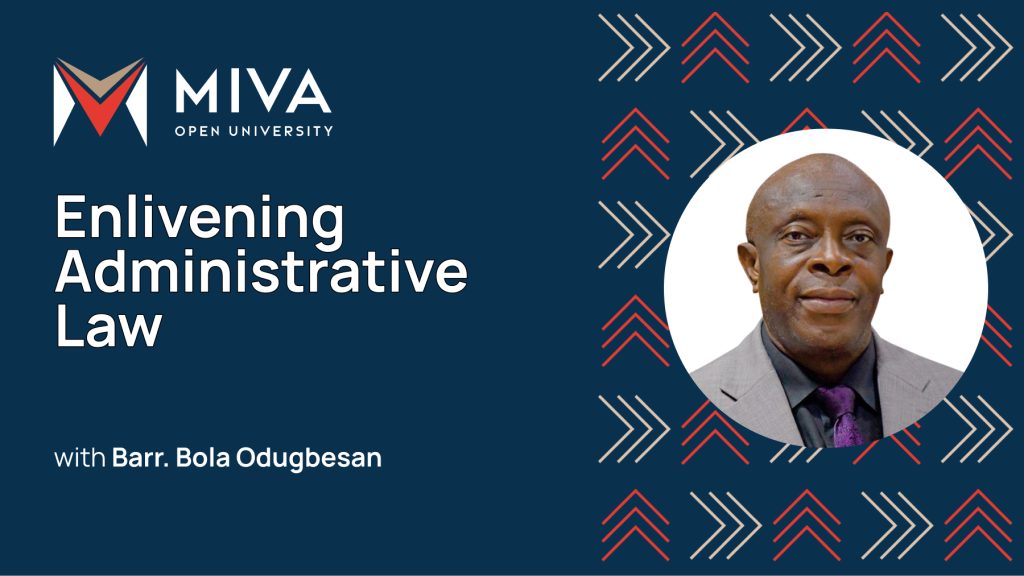
  • Barr. Bola Odugbesan: Making Administrative Law Real for Students.


    Laws are everywhere, but understanding how they actually work? That’s a whole different ball game. That’s where Barr. Bola Odugbesan comes in. He doesn’t just teach what’s written in textbooks — he shows students how administrative law plays out in real ministries, agencies, and government offices. This is where rules meet action, and where future leaders learn to navigate the tricky space of accountability, decision-making, and public service.

    Barr. Odugbesan’s journey is solid proof that experience matters. He trained as a lawyer at Ogun State University (now Olabisi Onabanjo University), joined the Nigerian Bar Association, and then took off in the civil service. From the Ministry of Justice to the Ministry of Aviation, Interior, and Defence, he climbed the ranks, eventually retiring as Director of Legal Services. Along the way, he worked on high-profile committees, shaping governance, reforms, and public accountability across the country.

    But it’s not all work and no play. He’s a reader, a music lover, and a football fan — someone who balances the intensity of public service with simple joys. That human side makes him relatable to students, showing them that even high-level professionals stay grounded.

    At Miva Open University, Barr. Odugbesan brings all of this to life. As Executive in Residence for Administrative Law, he turns complex legal concepts into practical lessons. Students see firsthand how decisions are made in ministries, why procedures matter, and how laws guide real action. It’s not just theory; it’s law in motion, showing students what works, what doesn’t, and why process matters.

    For students aiming to lead in public service, this perspective is priceless. Policies can set direction, but understanding the rules and procedures is what makes decisions stick. Learning from Barr. Odugbesan gives them clarity, confidence, and a practical edge in navigating government structures.

    Good governance isn’t just about intentions — it’s about doing things the right way, every time. And Barr. Bola Odugbesan helps students see exactly how that works. So here’s the question: are you ready to learn from someone who turns law into action and step confidently into your future as a public service leader?

  • The Role Of Self Discipline in Online Education.


    With Miss Pelumi Olugbemi, Economics Department (September 2025 Cohort).

    For many students navigating online education, success depends less on physical classrooms and more on personal structure. According to Miss Pelumi Olugbemi, an economics student of the September 2025 cohort, self-discipline is the defining factor that determines whether online learning becomes effective or frustrating. She describes self-discipline as the ability to stay committed to studies without constant supervision, noting that it requires intentional time management, focus, and consistency.

    Pelumi explains that unlike traditional classroom settings, online universities demand a higher level of personal responsibility. With fewer external controls, students must organize their schedules, meet deadlines independently, and resist the temptation to procrastinate. In her experience, the absence of physical supervision makes online learning more challenging, as distractions are more accessible and structure is largely self-imposed.

    To cope with these challenges, she has developed practical strategies to stay disciplined. These include using study timetables, setting daily academic goals, relying on reminders, and deliberately limiting distractions such as social media. She acknowledges that factors like poor internet connectivity, household noise, fatigue, and environmental interruptions can affect concentration, but believes that strong discipline helps reduce their impact.

    Self-discipline, she adds, directly influences engagement during live classes and recorded sessions. Staying disciplined allows her to attend classes consistently, remain attentive, and actively take notes. Without it, she admits that focus quickly fades, leading to poor understanding of course material and weaker academic performance.

    Beyond academics, Pelumi emphasizes that self-discipline contributes to long-term personal growth. It builds independence, responsibility, and effective time management skills that extend into everyday life. While motivation plays an important role, she believes discipline is sustained more by habit than emotion. For students struggling with online learning, her advice is simple but firm: create realistic study plans, reduce distractions, stay consistent, and remember that small daily efforts eventually lead to success.

  • Miva Open University Champions Student-Led Menstrual Health with Project Bloom.


    On February 2, 2026, Miva Open University, Abuja, proudly hosted the launch of Project Bloom, a groundbreaking student-led initiative by Fohetofu aimed at empowering female students with access to emergency sanitary pads and menstrual health education. Led by Miva student Tejere Francis, the program reflects the university’s commitment to innovation, social impact, and creating real-world solutions for its students.


    Project Bloom is a perfect example of how Miva encourages students to tackle real challenges on campus. From conception to execution, Tejere and her peers have turned a personal experience into a movement addressing period poverty and stigma. The university celebrated this initiative as a demonstration of its ethos: empowering students to take charge, lead with empathy, and create solutions that matter.

    “Project Bloom is about ensuring every student can study with confidence and dignity,” Tejere said during the launch. “No one should have to miss a class or feel embarrassed because they don’t have access to basic menstrual supplies.”

    Miva faculty and administrators echoed this sentiment. Dr. Aisha Bello, Dean of Public Health, remarked, “This initiative embodies the Miva spirit: learning by doing and applying knowledge to create positive social impact. We are proud to see our students champion menstrual equity on campus.”

    What Project Bloom Offers

    Project Bloom focuses on three core areas:

    Emergency Pad Access: Free pads are distributed through strategically placed dispensers across campus, ensuring students are never caught unprepared.

    Menstrual Health Education: Workshops and interactive sessions teach students about menstrual hygiene, cycle tracking, and self-care, breaking stigma and fostering awareness.

    Dignity and Confidence: Through open dialogue and peer support, the initiative promotes a positive, empowered approach to menstruation.


    By combining practical support with education, Project Bloom addresses both the material and emotional challenges of period poverty, setting a new standard for student-driven health initiatives in Nigeria.

    The launch brought together students, faculty, and partners including PadUp Africa and local wellness organizations, highlighting how collaboration can amplify social change. The event was filled with energy, engagement, and a shared sense of purpose, emphasizing that menstrual equity is a priority for both education and community well-being.

    Dr. Bello concluded, “Miva students are not just learning in the classroom; they are shaping the future of health and education in Nigeria. Project Bloom shows what’s possible when students are supported to lead meaningful initiatives.”


    Project Bloom is just the beginning. Miva encourages students, alumni, and the wider community to support the initiative through volunteering, donating pads, or helping raise awareness. Every contribution helps ensure that no girl is held back by her period.

    “A period should never be a barrier to education or dignity,” said Tejere, inviting everyone to get involved and help every girl bloom.

    Follow Fohetofu for updates and ways to participate: Instagram: @fohetofu
    Email: fohetofu@gmail.com

  • Certification Guide for Miva Faculty of Computing Students.


    As a computing student at Miva Open University, certifications are a powerful way to validate your skills, enhance your portfolio, and improve your career prospects. Whether you are aiming for software development, cyber security, data science, cloud computing, or other tech paths, here’s everything you need to know about earning, practicing, and leveraging professional certifications.


    Recommended Certification Providers.

    Miva partners with leading global tech companies to offer certifications, but you are not limited to these. Some notable providers include:

    Google: Digital marketing, IT support, Data Analytics, Project & Product Management, Cloud Skills.

    AWS: Cloud architecture, cloud operations, and developer certifications.

    Cisco: Networking, cybersecurity, and technology fundamentals.

    ISC²: Entry-level cybersecurity certificates.

    EC-Council: Ethical hacking, digital forensics, and network defense.

    Oracle: Java foundations and software development certifications.

    GitHub: Version control, collaboration, CI/CD pipelines, and software workflows.


    Other recognized platforms include Coursera, FreeCodeCamp, Udemy, and more. Always ensure the certification is recognized and credible.


    Key Guidelines for Certification Success .

    1. Start with one path: Choose a career path that aligns with your interests—examples include web development, backend development, software engineering, data science, machine learning, AI, network engineering, or cybersecurity. Research your path thoroughly before committing.

    2. Follow a structured roadmap: Begin with foundational courses, move to intermediate, and finally to advanced applications. Build projects as you learn—practical application is critical. Platforms like roadmap.sh can help you plan your learning journey.

    3. Practice as you learn: Don’t stop at badges or certificates. Apply your knowledge in academic projects, personal projects, or open-source contributions. A portfolio of practical work demonstrates your ability far more than certificates alone.

    4. Multiple certificates are better: One certificate can demonstrate competency, but having at least two strong certifications boosts credibility and your portfolio.

    5. Time management is crucial: Allocate consistent study time, track deadlines for free certifications and exams, and focus on progressive advancement. Quality over quantity matters—don’t rush to complete many courses without depth of understanding.

    6. Hands-on experience: Use platforms offering labs and practical exercises. For example, frontend developers can practice on frontendmentor.io, while GitHub Student Developer Pack provides tools for software development projects.

    7. Pay for exams if possible: Free certifications are great, but paid certificates often carry more weight and recognition.


    Career prospects you should consider are:

    1.Software Development / Engineering: Focus on Java (Oracle), GitHub workflows, version control, and full-stack development. Build real applications as you learn.

    2.Cybersecurity: CISCO, EC-Council, and ISC² offer recognized certificates. Look for courses in ethical hacking, network defense, cloud security, and digital forensics.

    3.Cloud Computing / Architecture: AWS and Google Cloud provide certifications that cover infrastructure, DevOps, cloud security, and solutions architecture.

    3.Data & AI: Google and AWS offer data analytics, machine learning, and AI certifications. Build projects with real datasets to show competency.


    Tips

    Consistency: Dedicate regular hours to studying and practicing.

    Portfolio Building: Combine your certifications with practical projects to demonstrate skills.

    Focus on One Course at a Time: Avoid jumping between unrelated courses; this leads to fragmented learning.

    Don’t Underestimate Any Course: Even beginner courses are important; they form the foundation of your advanced skills.

    Track Deadlines: Monitor certification, exam, and course deadlines to stay on track.


    Certifications are valuable, but skills, practice, and a strong portfolio matter most. Miva students have a unique opportunity to leverage partnerships with Google, AWS, Cisco, ISC², Oracle, GitHub, and other providers. By choosing a path, practicing consistently, and applying knowledge to real-world projects, you can build a professional brand and position yourself for success in tech.

    Remember: one certificate may get you a grade, but real competency comes from applied skills and demonstrable work.