
With Miss Pelumi Olugbemi, Economics Department (September 2025 Cohort).
For many students navigating online education, success depends less on physical classrooms and more on personal structure. According to Miss Pelumi Olugbemi, an economics student of the September 2025 cohort, self-discipline is the defining factor that determines whether online learning becomes effective or frustrating. She describes self-discipline as the ability to stay committed to studies without constant supervision, noting that it requires intentional time management, focus, and consistency.
Pelumi explains that unlike traditional classroom settings, online universities demand a higher level of personal responsibility. With fewer external controls, students must organize their schedules, meet deadlines independently, and resist the temptation to procrastinate. In her experience, the absence of physical supervision makes online learning more challenging, as distractions are more accessible and structure is largely self-imposed.
To cope with these challenges, she has developed practical strategies to stay disciplined. These include using study timetables, setting daily academic goals, relying on reminders, and deliberately limiting distractions such as social media. She acknowledges that factors like poor internet connectivity, household noise, fatigue, and environmental interruptions can affect concentration, but believes that strong discipline helps reduce their impact.
Self-discipline, she adds, directly influences engagement during live classes and recorded sessions. Staying disciplined allows her to attend classes consistently, remain attentive, and actively take notes. Without it, she admits that focus quickly fades, leading to poor understanding of course material and weaker academic performance.
Beyond academics, Pelumi emphasizes that self-discipline contributes to long-term personal growth. It builds independence, responsibility, and effective time management skills that extend into everyday life. While motivation plays an important role, she believes discipline is sustained more by habit than emotion. For students struggling with online learning, her advice is simple but firm: create realistic study plans, reduce distractions, stay consistent, and remember that small daily efforts eventually lead to success.
Category: Uncategorized
-
The Role Of Self Discipline in Online Education.
-
Miva Open University Champions Student-Led Menstrual Health with Project Bloom.
On February 2, 2026, Miva Open University, Abuja, proudly hosted the launch of Project Bloom, a groundbreaking student-led initiative by Fohetofu aimed at empowering female students with access to emergency sanitary pads and menstrual health education. Led by Miva student Tejere Francis, the program reflects the university’s commitment to innovation, social impact, and creating real-world solutions for its students.
Project Bloom is a perfect example of how Miva encourages students to tackle real challenges on campus. From conception to execution, Tejere and her peers have turned a personal experience into a movement addressing period poverty and stigma. The university celebrated this initiative as a demonstration of its ethos: empowering students to take charge, lead with empathy, and create solutions that matter.
“Project Bloom is about ensuring every student can study with confidence and dignity,” Tejere said during the launch. “No one should have to miss a class or feel embarrassed because they don’t have access to basic menstrual supplies.”
Miva faculty and administrators echoed this sentiment. Dr. Aisha Bello, Dean of Public Health, remarked, “This initiative embodies the Miva spirit: learning by doing and applying knowledge to create positive social impact. We are proud to see our students champion menstrual equity on campus.”
What Project Bloom Offers
Project Bloom focuses on three core areas:
Emergency Pad Access: Free pads are distributed through strategically placed dispensers across campus, ensuring students are never caught unprepared.
Menstrual Health Education: Workshops and interactive sessions teach students about menstrual hygiene, cycle tracking, and self-care, breaking stigma and fostering awareness.
Dignity and Confidence: Through open dialogue and peer support, the initiative promotes a positive, empowered approach to menstruation.
By combining practical support with education, Project Bloom addresses both the material and emotional challenges of period poverty, setting a new standard for student-driven health initiatives in Nigeria.
The launch brought together students, faculty, and partners including PadUp Africa and local wellness organizations, highlighting how collaboration can amplify social change. The event was filled with energy, engagement, and a shared sense of purpose, emphasizing that menstrual equity is a priority for both education and community well-being.
Dr. Bello concluded, “Miva students are not just learning in the classroom; they are shaping the future of health and education in Nigeria. Project Bloom shows what’s possible when students are supported to lead meaningful initiatives.”
Project Bloom is just the beginning. Miva encourages students, alumni, and the wider community to support the initiative through volunteering, donating pads, or helping raise awareness. Every contribution helps ensure that no girl is held back by her period.
“A period should never be a barrier to education or dignity,” said Tejere, inviting everyone to get involved and help every girl bloom.
Follow Fohetofu for updates and ways to participate: Instagram: @fohetofu
Email: fohetofu@gmail.com -
Miva adds flexibility to undergraduate tuition payments
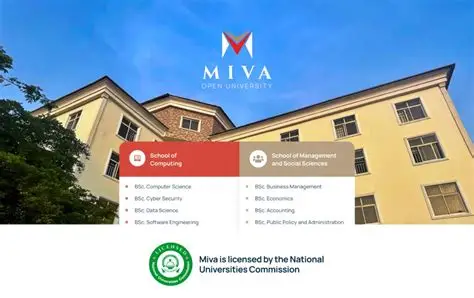
Miva, a leading African fintech platform, has announced an update to its undergraduate tuition payment system designed to give students and parents more value and flexibility. The enhancement aims to simplify fee payments while addressing the challenges many families face in managing education costs, especially in an era of growing tuition demands and digital adoption.
With the new update, Miva now allows users to spread undergraduate tuition payments over multiple instalments, giving families greater financial flexibility. Instead of paying the full tuition upfront, students can now plan payments according to their budgets without missing deadlines. This feature is particularly beneficial for households managing multiple education expenses or those relying on variable income sources.
In addition to flexible payment schedules, Miva has expanded the range of supported payment channels. Students and parents can pay using mobile money, bank transfers, debit or credit cards, and other digital wallets, ensuring accessibility for a wide range of users. Transactions are processed in real-time, ensuring immediate confirmation and reducing delays in fee allocation for universities.
Security and transparency are key elements of this update. Miva has enhanced encryption, fraud monitoring, and automated notifications, providing students and institutions with peace of mind that payments are safe and properly tracked. The platform also generates instant digital receipts, helping both students and universities reconcile payments quickly and accurately.
The update also improves the user experience for universities. Administrators can now manage multiple student accounts, track payment schedules, and generate detailed reports on collections, all through an intuitive dashboard. Automated reminders alert students of upcoming payments, reducing late fees and improving institutional cash flow.
Miva’s focus on value and flexibility reflects a broader effort to digitize and modernize financial processes in Africa’s education sector. By enabling more manageable tuition payments, the platform helps students focus on their studies while providing universities with reliable financial infrastructure.
This update positions Miva as a key partner for educational institutions and students alike, demonstrating how fintech innovation can make higher education more accessible, efficient, and responsive to the needs of modern learners.
-
Certification Guide for Miva Faculty of Computing Students.

As a computing student at Miva Open University, certifications are a powerful way to validate your skills, enhance your portfolio, and improve your career prospects. Whether you are aiming for software development, cyber security, data science, cloud computing, or other tech paths, here’s everything you need to know about earning, practicing, and leveraging professional certifications.
Recommended Certification Providers.
Miva partners with leading global tech companies to offer certifications, but you are not limited to these. Some notable providers include:
Google: Digital marketing, IT support, Data Analytics, Project & Product Management, Cloud Skills.
AWS: Cloud architecture, cloud operations, and developer certifications.
Cisco: Networking, cybersecurity, and technology fundamentals.
ISC²: Entry-level cybersecurity certificates.
EC-Council: Ethical hacking, digital forensics, and network defense.
Oracle: Java foundations and software development certifications.
GitHub: Version control, collaboration, CI/CD pipelines, and software workflows.
Other recognized platforms include Coursera, FreeCodeCamp, Udemy, and more. Always ensure the certification is recognized and credible.
Key Guidelines for Certification Success .
1. Start with one path: Choose a career path that aligns with your interests—examples include web development, backend development, software engineering, data science, machine learning, AI, network engineering, or cybersecurity. Research your path thoroughly before committing.
2. Follow a structured roadmap: Begin with foundational courses, move to intermediate, and finally to advanced applications. Build projects as you learn—practical application is critical. Platforms like roadmap.sh can help you plan your learning journey.
3. Practice as you learn: Don’t stop at badges or certificates. Apply your knowledge in academic projects, personal projects, or open-source contributions. A portfolio of practical work demonstrates your ability far more than certificates alone.
4. Multiple certificates are better: One certificate can demonstrate competency, but having at least two strong certifications boosts credibility and your portfolio.
5. Time management is crucial: Allocate consistent study time, track deadlines for free certifications and exams, and focus on progressive advancement. Quality over quantity matters—don’t rush to complete many courses without depth of understanding.
6. Hands-on experience: Use platforms offering labs and practical exercises. For example, frontend developers can practice on frontendmentor.io, while GitHub Student Developer Pack provides tools for software development projects.
7. Pay for exams if possible: Free certifications are great, but paid certificates often carry more weight and recognition.
Career prospects you should consider are:
1.Software Development / Engineering: Focus on Java (Oracle), GitHub workflows, version control, and full-stack development. Build real applications as you learn.
2.Cybersecurity: CISCO, EC-Council, and ISC² offer recognized certificates. Look for courses in ethical hacking, network defense, cloud security, and digital forensics.
3.Cloud Computing / Architecture: AWS and Google Cloud provide certifications that cover infrastructure, DevOps, cloud security, and solutions architecture.
3.Data & AI: Google and AWS offer data analytics, machine learning, and AI certifications. Build projects with real datasets to show competency.
Tips
Consistency: Dedicate regular hours to studying and practicing.
Portfolio Building: Combine your certifications with practical projects to demonstrate skills.
Focus on One Course at a Time: Avoid jumping between unrelated courses; this leads to fragmented learning.
Don’t Underestimate Any Course: Even beginner courses are important; they form the foundation of your advanced skills.
Track Deadlines: Monitor certification, exam, and course deadlines to stay on track.
Certifications are valuable, but skills, practice, and a strong portfolio matter most. Miva students have a unique opportunity to leverage partnerships with Google, AWS, Cisco, ISC², Oracle, GitHub, and other providers. By choosing a path, practicing consistently, and applying knowledge to real-world projects, you can build a professional brand and position yourself for success in tech.
Remember: one certificate may get you a grade, but real competency comes from applied skills and demonstrable work. -
The Role of Lecturers and Staff in Driving Learning at Miva Open University.

At Miva Open University, learning is shaped by a coordinated effort between academic leaders, lecturers, and support staff who work together to push knowledge effectively to students. Rather than relying on a traditional campus structure, Miva’s model places strong emphasis on guided digital learning, where every academic role contributes to clarity, consistency, and student growth.
At the top level, academic leadership provides direction and quality control. The Vice Chancellor and senior academic officers are responsible for setting teaching standards, approving curricula, and ensuring that programmes meet national and global benchmarks. Their work determines how courses are structured, how assessments are conducted, and how learning outcomes align with industry and societal needs. This leadership ensures that knowledge delivery at Miva is purposeful and credible.
Lecturers and professors form the core of knowledge transmission. They design course content, teach live and recorded sessions, moderate discussions, and assess student performance. Professors of Practice play a particularly important role by translating real-world experience into academic learning, helping students connect theory with practical application. Through assignments, projects, and feedback, lecturers actively push students to think critically, apply concepts, and build independent learning habits.
Heads of departments act as academic coordinators, bridging leadership and classroom delivery. They supervise lecturers, monitor course quality, and support students’ academic progression within their departments. Their role ensures consistency across courses and helps maintain academic discipline in a flexible online environment where students learn at different paces.
Beyond teaching staff, student support and operational teams play a quiet but essential role in learning outcomes. Success advisors guide students through academic challenges, track engagement, and help resolve issues that could disrupt learning. Technical and learning management system teams ensure that digital platforms function smoothly, allowing students uninterrupted access to lectures, assessments, and learning resources.
Together, Miva’s lecturers and staff create a learning ecosystem where knowledge is not merely shared but actively pushed through structure, mentorship, and support. This collaborative approach enables students to take ownership of their education while benefiting from strong academic guidance in a modern digital university setting. -
Academic Policies Explained: Grading, Assessment and You?

Ever wondered how your marks at Miva Open University are actually calculated? Or why some tasks feel like a free zone while others feel high stakes? Let’s break it down so you know exactly where you stand and how to plan your studies smartly.
Not everything you do affects your grade, and that is intentional. Peer-to-peer assessments, discussion forums, and those pop-up quizzes are all ungraded. They are there to help you engage, exchange ideas, and get comfortable with the material. Pre-semester and post-semester tests work the same way. They let you check your knowledge early and track your progress without the pressure of affecting your final mark. These ungraded activities are the perfect space to experiment, practice, and make mistakes safely.
The graded tasks are where your effort directly counts. Lab assessments, mid-semester tests, and end-of-semester tests are evaluated and contribute to your final score. These assessments are not just about memorizing facts. They measure how well you can apply what you have learned in practical ways. The weight of these graded components varies depending on your level. Undergraduates and master’s students have different expectations, so what counts heavily for one group may carry a slightly different mark for another. Knowing this can help you focus your energy where it matters most.
Exams are the ultimate checkpoint. They pull together everything you have learned and usually weigh more than any single graded assignment. But there is no need to panic. Your ungraded quizzes, discussion work, and practice tests are your secret weapon. They prepare you, build confidence, and give you a roadmap to succeed in the exams.
At the end of the day, Miva’s assessment system is all about balance. Ungraded tasks help you practice and stay engaged, graded assignments test your mastery, and exams confirm it. Understanding this mix helps you plan your learning, reduce stress, and maximize your results. Grades are not just numbers. They are milestones, feedback, and guides on your journey to success. -
This Week on the Miva Blog: Attendance, Skills, and Standard Structure in an Online University.

This week’s conversations on the Miva blog cut straight to what matters most in online education today. Not theory, not marketing language, but the real questions students are asking as they navigate learning in a digital-first university.
One of the most engaging pieces explored whether attendance should still matter in online universities, drawing directly from a student’s perspective. Instead of framing attendance as a rigid rule, the post examined it as a measure of engagement and familiarity with course material. The student insight made one thing clear: while online learning offers flexibility, completely disconnecting from scheduled learning moments can affect understanding. The piece struck a thoughtful balance, reminding readers that online education still requires intentional participation to truly work.
Beyond classroom engagement, Miva also made a strong statement on future-ready skills this week through its partnership with Hashgraph Developers. By offering free blockchain certification, the university is extending learning beyond degrees and into practical, industry-relevant knowledge. The post highlighted how students can gain exposure to emerging technologies without additional financial pressure, reinforcing Miva’s focus on equipping learners with skills that align with where the global job market is heading.
Structure also took centre stage with the release of the January 2026 live lesson schedule for undergraduates. In an online learning environment, clarity is everything, and the announcement emphasized Miva’s commitment to helping students plan ahead. By publishing schedules early, the university supports better time management, especially for learners balancing academics with work and personal responsibilities.
Rounding out the week was the announcement that 2026CSEAN has opened its membership channel to cybersecurity students in Nigeria. For students interested in cybersecurity, this presents an opportunity to connect with a wider professional community, access resources, and begin building industry networks early. The post reinforced the idea that learning does not stop at coursework. Exposure, community, and professional alignment are just as important.
Taken together, this week’s posts reflect Miva’s broader approach to online education. Learning is flexible, but not unstructured. Skills matter, but so does engagement. And while education happens online, opportunity extends far beyond the screen. It’s a reminder that at Miva, digital learning is not about doing less. It’s about learning smarter, with purpose. -
Miva Freshers Connect 2026 Opens Vendor Opportunities for Student Entrepreneurs.

As excitement builds ahead of the Miva Freshers Connect 2026, the university is extending the spotlight beyond networking and socialising to student entrepreneurship. Miva has officially opened vendor opportunities and sponsorship packages for the upcoming event, giving student business owners a chance to showcase their brands within the growing Miva community.
The initiative is aimed squarely at Miva students who run businesses and are looking for visibility, sales opportunities, and real engagement with fellow students. Freshers Connect is expected to attract a strong turnout of new learners, making it a strategic space for student vendors to promote their products and services while connecting directly with their target audience.
Interested students are required to indicate their interest through an official vendor interest form, after which submissions will be reviewed and vetted. Miva has made it clear that selection is competitive and limited, reinforcing the value and exclusivity of the opportunity. Submitting the form does not automatically guarantee a slot, as only selected vendors will be contacted.
This move reflects Miva’s broader commitment to nurturing well-rounded students who combine academic growth with practical skills and entrepreneurial ambition. By creating space for student-led businesses at a major community event, the university continues to encourage innovation, creativity, and economic participation among its learners.
Student entrepreneurs who want to be part of the Freshers Connect 2026 experience can apply via the official vendor interest form at:
https://forms.gle/zaZYUpyG5S5WX6yo8
With limited slots available, early and thoughtful applications may make all the difference as Miva blends community, learning, and enterprise into one vibrant student experience. -
Miva Open University Set to Welcome January 2026 Cohort with the Infamous Freshers’ Connect Event Across Nigeria.

Miva Open University is getting ready to officially welcome its January 2026 cohort with the Miva Freshers Connect 2026, a relaxed but intentional meet-up designed to help new students settle into university life with confidence. As thousands of learners begin their academic journey with Miva, the event is positioned as an early opportunity to connect beyond screens and start building real relationships that often define the university experience.
Scheduled for Saturday, 7 February 2026, the Freshers Connect will take place simultaneously in Abuja, Lagos, Jos, and Port Harcourt, bringing together students from different locations at the same time. Kicking off at 2:00 PM, the gathering promises an easygoing atmosphere where freshers can unwind, meet their cohort, and put faces to names as they step into this new chapter.
Beyond the social element, the Freshers Connect reflects Miva’s broader approach to learning, one that balances flexible online education with a strong sense of community. For many students, especially those new to virtual learning, starting university can feel distant or isolating. This event helps bridge that gap, offering a space to form friendships, share expectations, and feel reassured that they are not navigating the journey alone.
The university’s focus on connection from day one is deliberate. Students who feel supported and engaged early often adapt faster, collaborate better, and stay motivated throughout their studies. By creating this shared experience at the start of the session, Miva is reinforcing the idea that while learning may be digital, the community behind it is very real.
New students who plan to attend are encouraged to confirm their participation ahead of time via the official RSVP link at:
https://luma.com/7sm8e5jx
As anticipation builds for the January 2026 session, the Miva Freshers Connect stands out as a warm welcome and a reminder that every academic journey is better when it begins with connection. -
Should Attendance Still Matter in Online Universities? : An Insight Into A Student’s Perspective.

From Mr. Sherriff Shittu, 100 level Economics Department (September 2025 Cohort.)
When people talk about attendance in an online university, I think it means different things to different students. For me, attendance is not really about showing up for a live class at a fixed time. It’s about taking my classes on the LMS, going through the materials, watching the videos, and marking the lessons as done. That’s how I engage with my courses. Live sessions don’t happen very often anyway, maybe once or twice a month, so most of my learning happens outside those moments.
Honestly, I haven’t attended many live classes, and it’s not because I don’t care. They just haven’t been very effective for me. I learn much better from recorded videos because I can watch them at my own pace, pause when I don’t understand something, and go back as many times as I need. With live classes, things can get chaotic, and sometimes you log in, stay till the end, and still don’t feel like you truly learned. I’ve had situations where attendance forced me to be present without actually gaining much from the session.
One challenge I face with live attendance is scheduling. Class times are usually shared about 24 hours before, and that sometimes clashes with other commitments I already have. Internet and power supply don’t really affect me much, so that’s not the issue. The bigger issue is that online learning is supposed to be flexible, and fixed live sessions don’t always fit into that idea, especially when recorded materials already exist and work better for some of us.
That said, I don’t think attendance should be ignored completely. I believe students should be penalized for missing classes, not in a harsh way, but because attendance is the minimum way to measure whether a student is familiar with the learning resources. If you’re not engaging with the materials at all, chances are you won’t do well in exams. At the same time, I don’t think attendance alone accurately reflects engagement. It’s a good starting point, but it shouldn’t be the only yardstick.
For me, what matters most is understanding the course content, even more than attendance marks. Ideally, online learning should be flexible enough to allow students download videos and learn offline without stress. I think attendance should still be compulsory, but redefined. Taking classes on the LMS and submitting assignments should count as real participation, while live sessions should focus more on meaningful interaction. Attendance should matter in online schools, yes, but it should support learning, not just force students to log in.